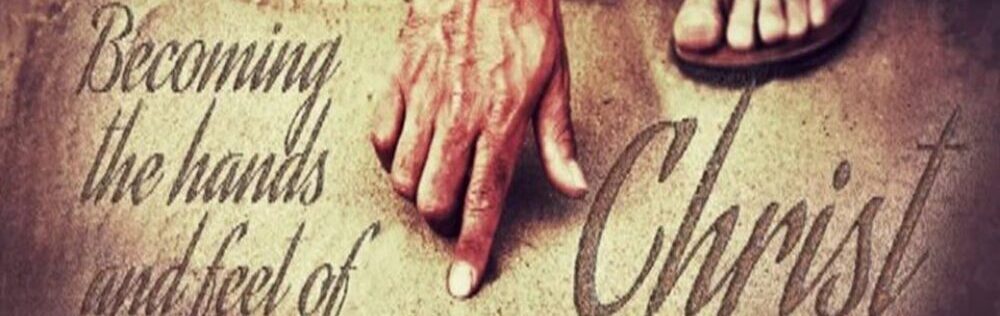
This upcoming Sunday marks the end of Easter Season. On the Christian calendar, it’s called Ascension Sunday, named after Luke’s story of Jesus’ Ascension – or departure – to Heaven. (This story is found in both Luke’s Gospel (24:50-53) and his Book of Acts (1:9-11) – told in two versions.)
In the more often cited Book of Acts, we read that after the risen Christ had spoken his final words to his followers, “Jesus was lifted up, and a cloud took him out of their sight.” Luke, then, refers to them “gazing up toward heaven while he was going.”
As a kid who watched the TV show, Star Trek, I imagined this happening as a kind of “Beam me up, Scotty” kind of moment. But, as an adult child of God who’s grown beyond literal understanding into being a critical reader of Scripture, I no longer interpret this story as being an historical account. Rather, I see it – along with New Testament scholar, Marcus Borg, as a parable that conveys a meaning, namely – the “Lordship” of Christ Jesus (in contrast to the “lords” of this world) and his freedom from space and time limitations.
It’s one thing to believe a story to be historically true, quite another to understand it as parable. As history, a story is about something that happened a long time ago to someone else. As parable, it’s something that may happen to us.
Now, whatever you believe this story to be, imagine if Christ were truly Lord of our lives! What might be different about us, Christ’s church, and the world?
Blessings of Fellowship with Christ Jesus, Pastor Ed
Sunday is a “high holy day” you won’t find on the Christian calendar. It’s Mothers’ Day. And, it’s an important “holy day” in our society.
Why? Many, with sentimental appreciation, say, “It’s because mothers are so full of love and have worked tirelessly raising their children.” But, cynics say, “It’s a profitable holiday for card companies, flower shops, restaurants, and makers and retailers of Mom-friendly products – such as jewelry and digital photo-frames being pushed in recent years.”
Both perspectives contain kernels of truth. Many mothers have worked tirelessly, raising their children in extravagant ways. And, many have worried endlessly along the way. But, sadly, some have not. (After all, mothers are human.)
Many daughters and sons have gone to extravagant ends and expenditures to thank their mothers for their love. One Reddit responder calls Mother’s Day an “annual guilt-fueled ritual where society briefly acknowledges all the unpaid labor, emotional support, and mental load moms carry – with a $9 card and a mimosa.” And, news organizations report that consumers will spend $38 billion on Mother’s Day gifts this year. (No wonder, Anna Jarvis, who founded Mother’s Day to honor mothers, later came to dislike the commercialization of the day!)
Ultimately, the proof of what constitutes the holiness – or unholiness – of Mother’s Day is contained in the “pudding of love – and money.” Love is and isn’t free. The one loved benefits from love without payment. And, love given always costs the giver something – and, sometimes, a lot.
If you’re not attending church on Sunday because you’re a daughter or son honoring your mother’s love, or you’re a mothering being honored for your love, I hope it’s a joyous, meaning-filled day. And, know that those of us worshipping in church will be remembering and honoring your love by thanking God!
Blessings of Love’s Holiness – whether God-given or Human-given, Pastor Ed
Next Sunday, May 3rd, we’ll share, or as we sometimes say, “celebrate” Communion. But, why do we say “celebrate?” What’s there to “celebrate” when we remember Jesus’ death by crucifixion?
Some may say we celebrate Jesus’ sacrificial death because they believe it brings us forgiveness by satisfying God’s need of a perfect sacrifice. But, I have a different understanding of God and God’s “needs.” How about you?
Others will say communion reminds us of a new covenant with God that replaces an old Hebrew system of law and sacrifice. But, I think this represents but one of several understandings of the Hebrew law shared by New Testament writers.
Some will say communion represents obedience to Jesus’ command, “Do this in remembrance of me.” But, this represents Luke’s unique expression of what Jesus said.
Others will say communion proclaims the Lord’s death until he returns and serves as a reminder of the promise of future restoration. But this represents literal apocalyptic interpretation that I don’t share. How about you?
Ultimately, the way I “celebrate” remembrance of Jesus’ execution by Roman capital punishment is by seeing Good Friday through the lens of Easter. For through this lens, I see the possibility of redemption, renewal, and potential in God-given life – whose origins I cannot fathom, but in which I can humbly place my faith’s trust.
So, it is, we’ll “celebrate” Communion next Sunday. And, how fitting – since it’s Eastertide!
Blessings of Communion with Jesus and God, Pastor Ed
We’re coming to the 4th Sunday of Easter. It represents our having passed through the midpoint of Eastertide with its 50 days and seven Sundays.
Up to this point, a common theme of our previous 3 Sunday Scriptures has been recognition of the Risen Christ. Last Sunday, Luke reported to us that, when 2 followers were walking on the Emmaus Road, “Jesus himself came near and went with them, but their eyes were kept from recognizing him.”
Their experience echoed that of Mary on Easter when she mistook the Risen Christ for a gardener in the graveyard. And, it echoed that of Thomas who – when he heard others’ reports of having seen the Risen Christ – said he wouldn’t believe them unless he saw and touched Jesus’ wounds himself.
Now, as living characters in the continuing story of Jesus’ Resurrection, the questions we’re left with are: “What are our experiences of the risen Christ?”, and “Do we recognize Jesus in them?”
Lest, we say we’ve never had any experiences of the risen Christ or sightings of Jesus, I remind you of Jesus’ implicitly teaching his followers in a parable of “sheep and goats” (not really about animals or individual people, but of societies and nations) that we see him in the needy people of our world. But then, especially then, the question is: do we recognize Jesus – and respond graciously and generously – or not? Do you? And what about us – as Christ’s church?
Blessings of Being “in the Middle” of Eastertide, Pastor Ed
It’s April 15th, and Federal Income Tax forms – with any payments owed – are due for mailing today! Have you filed your tax forms? And, if necessary, have you rendered your payment unto “Ceasar?”
Few are happy about making payments to “Caesar.” And, many are especially unhappy this year because they’re not so pleased with “Caesar’s” conduct these days. Especially since his Easter Sunday tweet and subsequent Eastertide expressions, decisions and actions.
Interestingly, some of “Caesar’s” expression has focused on Christianly, and Christians, as well as Jews and Muslims. A lot of it has been wildly unkind, and has riled many a Christian leader, some of whom have offered their not so grace-filled expression in return.
So, I want to share with you one Christian leader’s expression with you today. It’s an Easter Pastoral Letter from Rev. Darrell Goodwin who serves as Executive Conference Minister and President of our neighboring Southern New England Conference. See what you think. And, let me know…
Blessings of Rendering Unto Caesar the Things that Belong to Caesar, Pastor Ed
Dear Beloved, Christ is risen. Christ is risen indeed. Each year we proclaim these words as an echo of the empty tomb, but this Easter I find myself holding them not just as tradition, but as a deep and urgent truth for the world we are living in right now. We are surrounded by so much that feels fragile and fractured; war continues to devastate communities across the globe, divisions run deep within our own nation, and many are carrying a quiet exhaustion that comes from wondering if things will ever truly change. And yet, Easter meets us here. It does not wait for things to be settled or peaceful before it speaks. It does not arrive once the world has put itself back together. Instead, resurrection breaks in right in the middle of uncertainty and reminds us that God is still at work, even when the evidence feels hard to see. This is what makes Easter so powerful. It is not simply a remembrance of what God has done. It is a declaration of what God continues to do, bringing life where there has been loss, hope where there has been despair, and connection where there has been division. In a moment like this, the Church cannot afford to shrink back or grow quiet. We are being invited, once again, to remember who we are. We are a people shaped by resurrection, called not only to believe in it, but to live it in ways that are visible, tangible, and transformative. That is why our shared theme, The Ties That Bind, feels especially meaningful in this season. Because in a world that is constantly pulling itself apart, God is still drawing us together. We are bound to one another in ways that go deeper than agreement or familiarity. We are connected through a shared calling to love, to serve, and to show up for one another in ways that reflect the heart of God. When one part of the body suffers, we all feel it. When one community rises, we all are strengthened. This is not abstract theology, it is the lived reality of what it means to be a Covenantal Church. And if I am honest, I believe this is one of the most important witnesses we have to offer right now. Not perfection. Not certainty. But connection. A refusal to give up on one another. A commitment to stay at the table, to do the hard work of community, and to embody a different way of being in a world that often chooses separation over solidarity. We really are stronger together than we are apart, and this Easter invites us to take that truth seriously. So I want to encourage us, in this season of resurrection, to lean into both action and prayer in ways that reflect the depth of our calling. Let this be a time when we show up more fully in our congregations, in our neighborhoods, and in the public spaces where decisions are shaping the lives of so many. Let us be present with those who are hurting, attentive to those who are overlooked, and courageous enough to stand for what is right, even when it is not easy. And alongside that action, let us deepen our commitment to prayer. Let us pray for a world that is aching for peace. Let us pray for leaders to be guided by wisdom and compassion. Let us pray for communities that are carrying grief and uncertainty. And let us also pray for the Church, that we might be renewed, strengthened, and reminded of the sacred responsibility we carry in this moment. Resurrection is not something we simply celebrate. It is something we are invited to embody. God is still rolling stones away. God is still calling life out of places that feel lifeless. And God is still gathering us together, binding us in love, and sending us out as witnesses to hope.
My prayer this Easter is that we will have the courage to rise into that calling, not alone, but together, trusting that the ties that bind us are stronger than anything that seeks to divide us.
With hope and in resurrection,Rev. Darrell L. Goodwin Executive Conference Minister and President Southern New England Conference
Like Christmas, Easter has come and gone – in one day on the calendar. But as with Christmas, a season follows. And, Eastertide is longer than Christmastide – by 38 days (50 vs. 12).
This difference in length of seasons is due to the timing of subsequent “holy” days. After Christmas comes Epiphany commemorating the wise astrologers’ arrival at the manger 12 days after Jesus’ birth, and after Easter comes Pentecost commemorating the Holy Spirit’s descent on Jesus’ followers in Jerusalem 50 days after Jesus’ resurrection.
There are Biblical meanings associated with these numbers, but I think there’s a psychological element at work here, too, namely that it takes longer to embrace Easter than it does Christmas. For Christmas is about the birth of the divine, new life in a birth, and Easter is about the birth of human, new life in a death! Christmas seems a little more “natural” and easier to “swallow” than Easter.
And, as if 50 days weren’t enough for us to internalize Easter’s amazing story, the church has not only given us this annual season to commemorate Easter’s new birth; it’s given us 52 Sundays a year for as many years as we have on earth! For, our forebears imagined every Sunday to be a commemoration of Easter!
Now, what if we imagined every Sunday in this way? What if we imagined every Sunday as not simply a day of rest or a day for worship of God, but rather as Easter and a day of our own new birth out of our past life and, even, our impending death? For a moment… just imagine!
Blessings of Eastertide – and birth after birth after birth, Pastor Ed
Dear Friends in Christ, Ever since last year’s Easter message from President Trump which featured traditional holiday greetings along with inaccurate, arrogant Christian Nationalist expressions and sharp political attacks on perceived enemies, I’ve found myself wondering what Easter message he might issue this year. How about you?
If I were President, my message would have been different because I think Easter is a day for highlighting the miraculous range and power of divine love! But, what about you? If you were President, what would your Easter message to our nation be?
Regardless of what your Easter message – or mine – might be, I really wonder: If Jesus issued an Easter message, what would it be?
We find clues in what the Gospel authors have left us in their stories about the Risen Christ. For instance, John reports Jesus asking Mary outside his tomb: “Why are you crying?” (John 20:16). There, Jesus exhibited deep empathy and his Easter expression was filled with loving concern. Matthew reports Jesus saying to the women who arrived early at the tomb: “Do not be afraid.” (Matthew 28:10) He didn’t want them to feel anxious or frightened, and his Easter expression was filled with loving concern. Finally, Luke reports Jesus’ saying to followers who were cowering in a locked, upper room, “Peace be with you.” (Luke 24:36) He didn’t want them to harbor unsettled, terrorized hearts and his Easter expression was, again, filled with loving concern.
The gospels go on and on like this after Jesus’ resurrection to the point where Matthew reports Jesus saying, “I will be with you always until the end of the age.” (Matthew 28:20)
From these examples, we see, Jesus was experienced aby his followers one with Easter expression full of empathy, compassion, and a faithful, everlasting loving hope for peace and wellbeing for all people. Would that all of our Easter expressions – including that of the President – be the same!
Blessings of Holy Week’s Journey to Jesus’ Tomb – and Beyond, Pastor Ed
During this Lenten Season we’ve been listening to Jesus’ teachings of parables regarding what he believed was the present, but not yet fulfilled, Kingdom of God. (New Testament scholar, Dominick Crossan calls this the “indwelling, wise and compassionate ruling-style of God.”)
This upcoming Sunday we’ll hear Jesus teach us about entrance into this realm as like being invited to a banquet. One has to decide whether one will attend.
Now everyone loves a good feast! But, one’s decision about going to this feast will depend on several factors including one’s other demands, alternative choices, and personal priorities.
It’s the same with Easter. Lent is an invitation to come to life, to life in the Spirit and to a life of love that never ends. The only question is: “Can and will we decide to show-up?”
Dear Friends in Christ, Today is Ash Wednesday! It’s the doorway into the season of Lent.
Lent is a time of preparing for Easter. It’s a time for looking inward and asking ourselves, “How might we better serve our life’s purpose – our call to be steward’s of God’s creation?” This turning is all about discovering how we might bring forth more vividly the Kingdom of Heaven on earth.
Today, on this Ash Wednesday, you’ll have a chance to reflect on this question – and more. You’re invited to stop by the church anytime between 4:30 and 6:30pm to listen to reflective music, pray, and/or receive the imposition of ashes! In your own time. And… you’re invited to come at 6:30pm for a short worship service that will feature reflective thoughts, music, and the imposition of ashes.
If you stop by, I’ll see you here. If you can’t come and would like to receive ashes, just have a conversation of faith, or share a prayer during Lent, be in touch, and I’ll show up – where you are!
Blessings of Meaningful Preparation for Easter’s New Life, Pastor Ed
This upcoming Sunday is Transfiguration Sunday, the last Sunday of Epiphany Season. Full of this season’s learnings about Jesus, born to be a savior, we enter the season of Lent on Ash Wednesday, one week from today.
Lent is a time for turning inward, shining Christ’s light on ourselves to prepare for Easter resurrection. (Resurrection is about us as well as Jesus!) One way to do so is by reading devotions, reflections on Scripture passages that give us relevant food for thought and transformation.
Do you read devotions? If not, and you’re a computer user, I encourage you to subscribe to the United Church of Christ Daily Devotional. (Daily Devotional – United Church of Christ) In it, gifted UCC Pastors and other writers offer timely thoughts on passages in Scripture.
Below is an example of one from Epiphany season regarding Baptism. See what you think.
Blessings of the Seasons, Pastor Ed
Water & ICE by Rev. Matt Laney, published Jan 24, 2026
Then Jesus came from Galilee to John at the Jordan, to be baptized by him. – Matthew 3:13 (NRSV)
At the dawn of life, there was water: wild and wide, two Hs holding an O, a life-giving dance, the first deep “yes” of all that’s meant to be.
Baptism does not create our worth. It names what’s true from the start of birth. It rinses away all that hides us. It calls us to our rightful place.
But drop the temperature, slow water’s vibration, and the dance of molecules stagnates. Liquid life assumes a rigid shell, a frozen form, hard and cold. When ice takes hold, it is unyielding, unforgiving—a kind of death that keeps on living, slippery and slick, isolating your breath as soon as it escapes.
Today we witness frozen power: fear made into policy, vulnerability named a threat and a crime, mercy mocked as a waste of time. Communities hunted, hearts shut down, compassion throttled.
Our anger rises, skin runs hot, love grows cold, the conscience knots. We want hardness to meet hardness, ice to meet ice. We want to strike back. That is what frozen power wants most: not only to chill one target; not just to tear us, friend from friend; but to make everyone as cold as them.
We are people of water who stir, not shake. People who flow and bend, not break. People who refuse to freeze compassion. People who let love move us into action.
Prayer Your love-made-flesh is the whole deal. Yours is the love that heals. Yours is the only Love that will suffice and has the power to melt the ice.